heating guide
How to Heat an Uninsulated Garage
Heat an uninsulated garage by limiting the conditioned zone, reducing air leakage, and choosing safe equipment for short recovery periods.
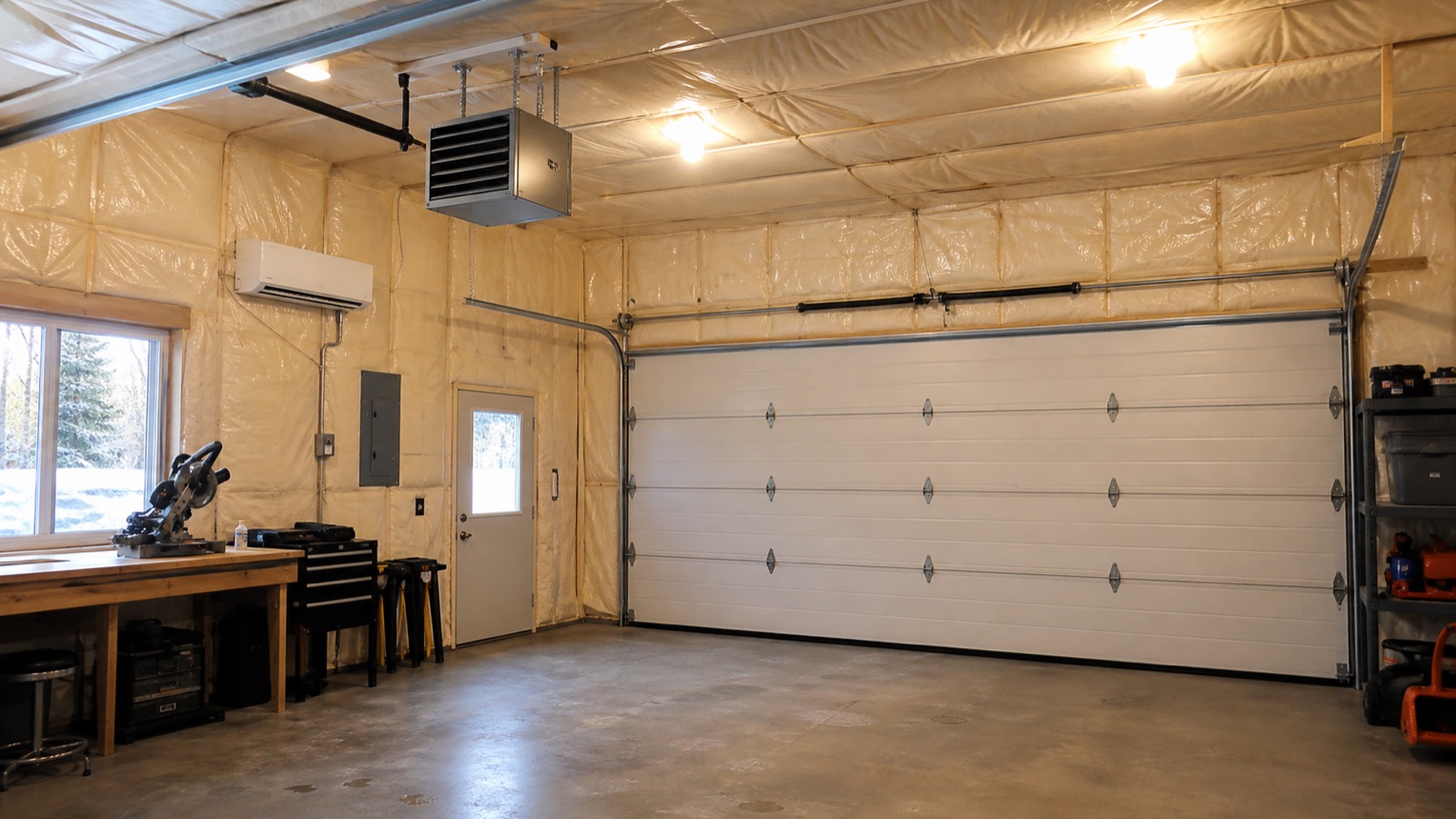
Start by reducing the load
An uninsulated garage loses heat quickly through surfaces and uncontrolled air exchange. For occasional work, create a smaller occupied zone, seal obvious non-required gaps, weatherstrip the door, and use radiant heat where direct warmth is useful. For regular occupancy, an envelope upgrade usually improves comfort more than simply increasing heater output.
Choose for the operating pattern
Electric resistance heat is simple at the point of use but may require a new circuit. Vented combustion can deliver higher output but introduces fuel, venting, combustion-air, clearance, and maintenance requirements. A heat pump can be efficient, but cold-weather capacity and defrost performance must match the climate.
Avoid hidden hazards
Never defeat tip-over switches, clearances, guards, or ventilation requirements. Do not use outdoor-only combustion heaters indoors. Keep ignition sources away from gasoline vapor, finishing products, and combustible dust. Attached garages also need careful pressure control to avoid moving contaminants toward the home.
Estimate, then verify
Use the heater-size calculator for a broad range. Permanent equipment should be checked against a room-by-room load method and local code requirements.