insulation guide
Garage-Door Insulation Comparison
Compare insulated garage doors, retrofit kits, rigid foam, and radiant barriers by thermal continuity, air sealing, weight, fire behavior, and durability.
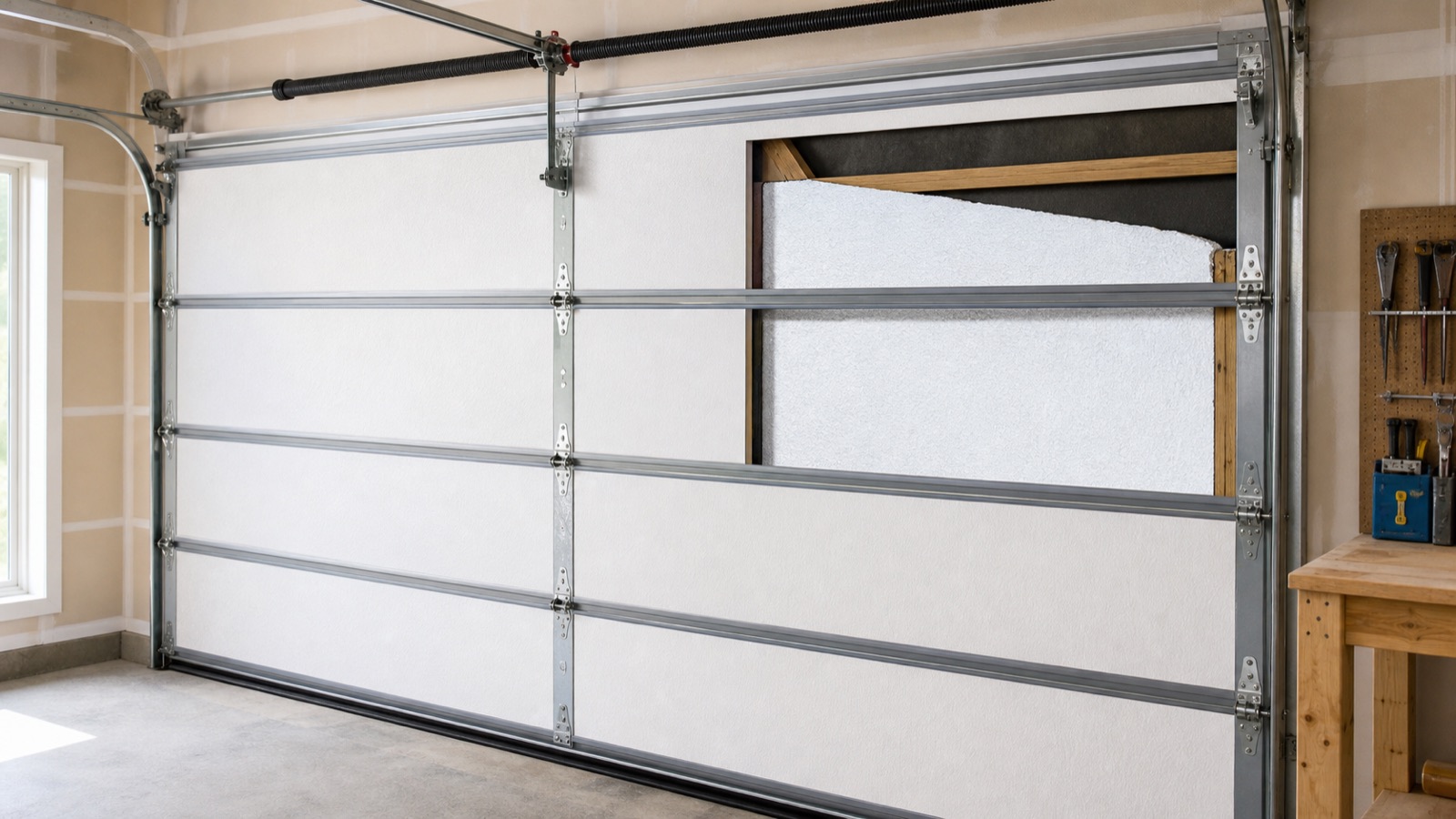
The door is an assembly
Panel R-value alone does not describe whole-door performance. Section joints, perimeter seals, glazing, metal framing, and air leakage can dominate. Factory-insulated doors usually provide the most integrated assembly; retrofit products trade cost and convenience against continuity, durability, and added weight.
| Approach | Strength | Main limitation |
|---|---|---|
| Factory-insulated door | Integrated skins and core | Highest replacement cost |
| Rigid-panel retrofit | Useful thermal resistance per thickness | Gaps, exposed-foam rules, fit |
| Fibrous kit | Fits some door systems | Compression and facing durability |
| Radiant barrier | Can reduce radiant transfer with an air space | Not equivalent to bulk insulation |
Before adding weight
Confirm the door manufacturer permits the retrofit. Added mass can affect springs, balance, opener loading, and safety. Do not adjust torsion springs without appropriate training and tools; use a qualified door technician.