climate control guide
Complete Guide to Garage Climate Control
Plan a garage climate-control system by addressing the building envelope, moisture, ventilation, heating, and cooling in the right order.
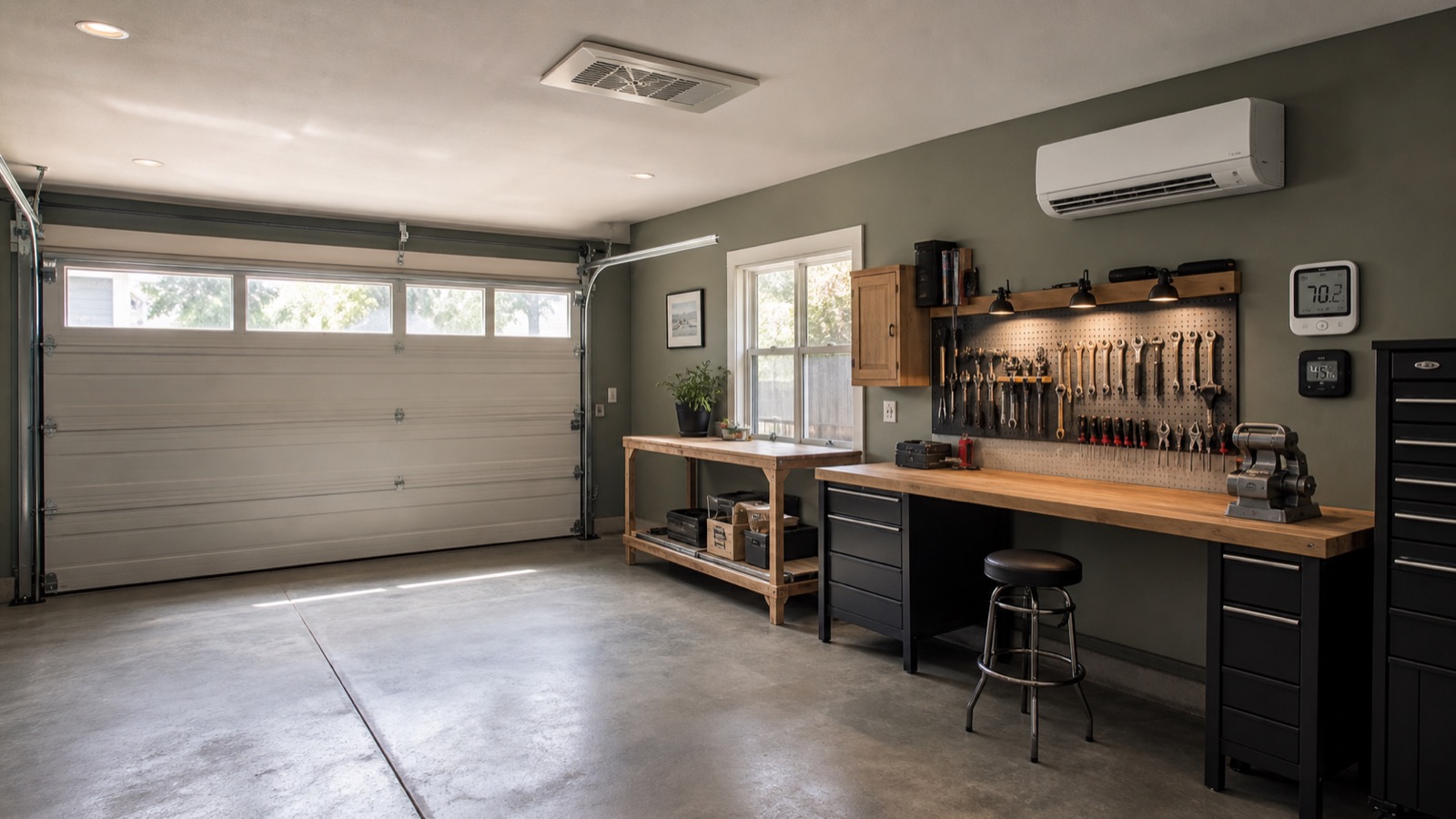
The planning order
Treat the garage as a small building system. First stop bulk water, then define the air and thermal boundary. Next identify pollutants and moisture sources. Only then estimate heating, cooling, ventilation, or dehumidification loads. This order prevents equipment from compensating for defects that should be repaired.
1. Document the conditions
Measure length, width, ceiling height, door area, and major construction types. Note visible gaps, damp surfaces, vehicle entry, sun exposure, and how often doors open. Record outdoor temperature and humidity when the problem occurs rather than relying on a single annual average.
2. Improve the envelope
Air sealing and insulation reduce heat transfer, but assemblies must still manage water vapor and drying. Climate, wall construction, and attached-garage fire separation affect appropriate materials. Preserve required fire ratings and have structural or electrical modifications reviewed where needed.
3. Separate comfort from contaminant control
Heating and air conditioning do not make solvent fumes, carbon monoxide, or fine dust safe. Use source capture and exhaust designed for the hazard. Replacement air must not backdraft combustion appliances or pull contaminants into living space.
4. Size from loads, not labels
Use volume, temperature difference, envelope quality, leakage, solar gain, moisture load, and operating schedule. Our heater-size calculator exposes its assumptions, but a professional load calculation is appropriate for permanent systems.
Safety boundary
Follow manufacturer instructions and applicable electrical, fuel-gas, mechanical, fire, and building codes. Qualified advice is appropriate for combustion appliances, new circuits, refrigerant systems, structural changes, and hazardous exhaust.
Frequently asked questions
Should insulation come before a heater?
Usually, because it reduces heat loss and improves temperature stability. Correct water entry and confirm assembly compatibility first.
Can one fan handle dust, fumes, and general heat?
Not reliably. These hazards need different capture locations, filtration or discharge arrangements, and sometimes explosion-protected equipment.