cooling guide
How to Cool a Garage Without Windows
Cool a windowless garage by reducing heat gain, creating a safe exhaust path, and using properly installed air conditioning where needed.
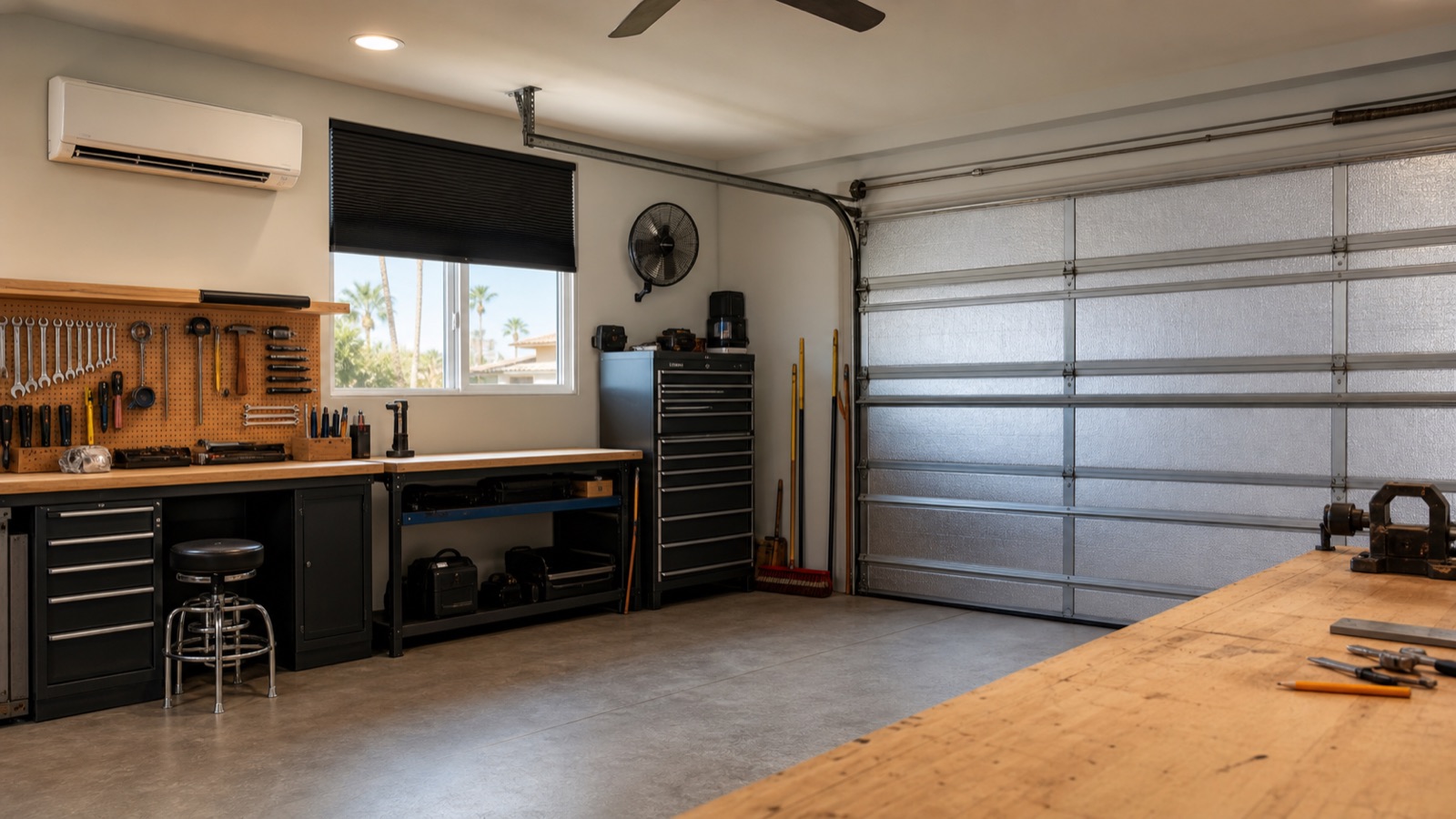
Reduce heat before moving it
Shade sun-exposed doors and roof surfaces, seal unwanted hot-air leakage, and improve compatible insulation. Next, exhaust accumulated heat only when outdoor air is cooler or otherwise beneficial. A fan needs deliberate intake air; without it, airflow falls and pressure can pull contaminants from unsafe locations.
Air-conditioning options
A ductless mini-split rejects heat outdoors through refrigerant lines and generally suits permanent conditioning. A portable AC needs a short, sealed exhaust route; single-hose units can depressurize the garage and draw hot replacement air through leaks. Evaporative cooling is climate-dependent and adds moisture.
Safety and installation
Do not vent hot air, moisture, or refrigerant into an attic or attached living space. Refrigerant work and new circuits should be handled by qualified professionals. Cooling does not replace source capture for exhaust, solvents, welding fumes, or dust.