ventilation guide
How to Ventilate a Windowless Garage
Ventilate a windowless garage with deliberate exhaust, replacement air, and source capture matched to the contaminants present.
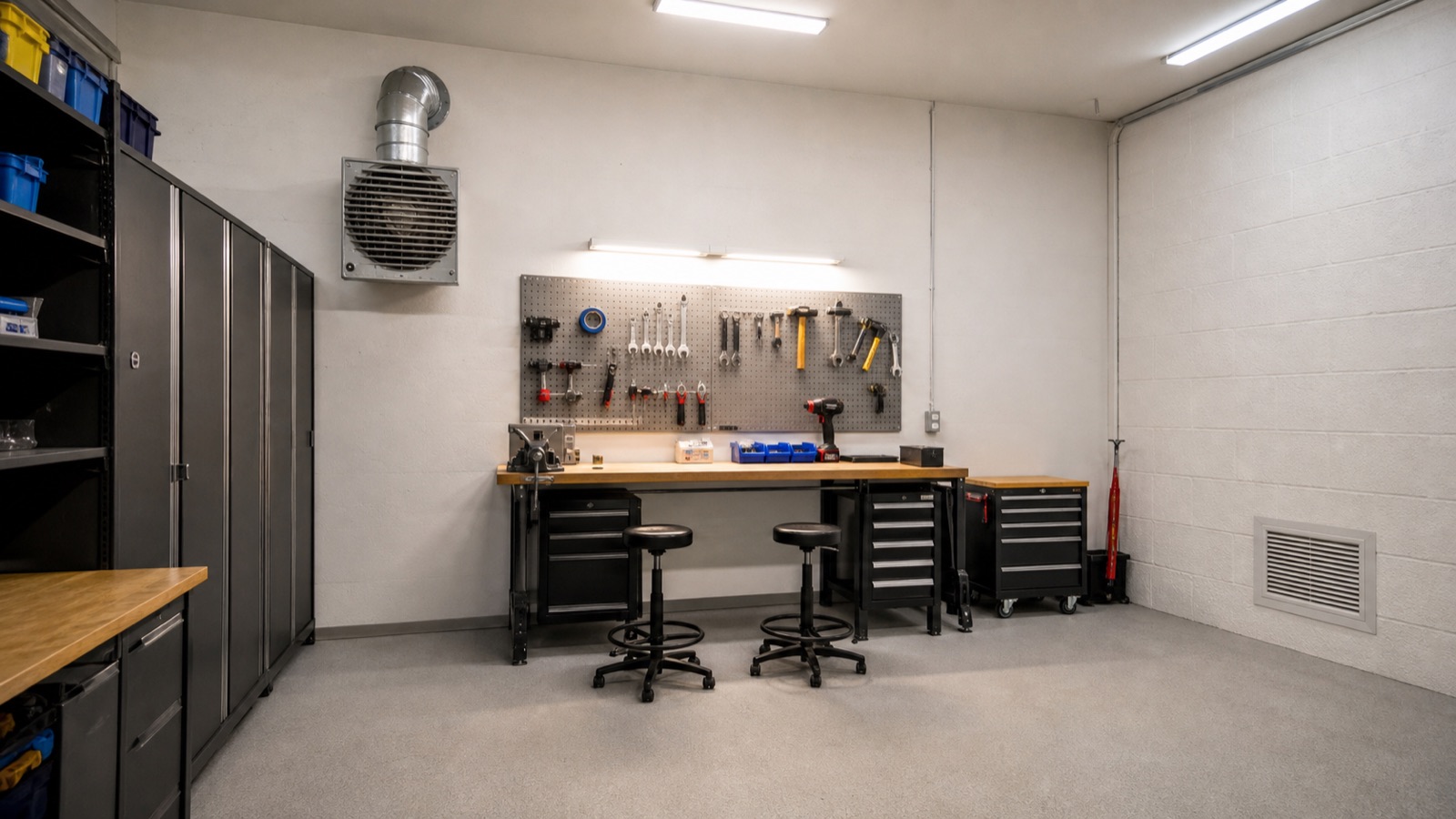
Build an airflow path
An exhaust fan cannot move its rated airflow without replacement air. Place intake and exhaust to sweep the occupied zone without pulling garage contaminants toward a house. Discharge outdoors where contaminants cannot re-enter openings or affect neighbors.
Match controls to the hazard
General ventilation may manage heat and background odors, but it is not a substitute for tailpipe extraction, dust collection, welding-fume capture, or a properly designed spray area. Flammable vapor and combustible dust can require specially rated equipment and professional design.
Pressure and combustion safety
Check for fuel-burning appliances and attached-house pressure relationships. Excessive depressurization can backdraft combustion equipment. Follow code, manufacturer instructions, and qualified design advice for hazardous operations.