humidity guide
Garage Dehumidifier Sizing Guide
Size a garage dehumidifier by moisture load, temperature, air leakage, drainage, and rated test conditions—not floor area alone.
Capacity labels need context
Dehumidifiers are rated under standardized conditions that may be warmer and wetter than a typical garage. As coil temperature falls, frost and defrost cycles can reduce water removal. Always inspect performance information for the lowest expected operating temperature.
Estimate the actual moisture load
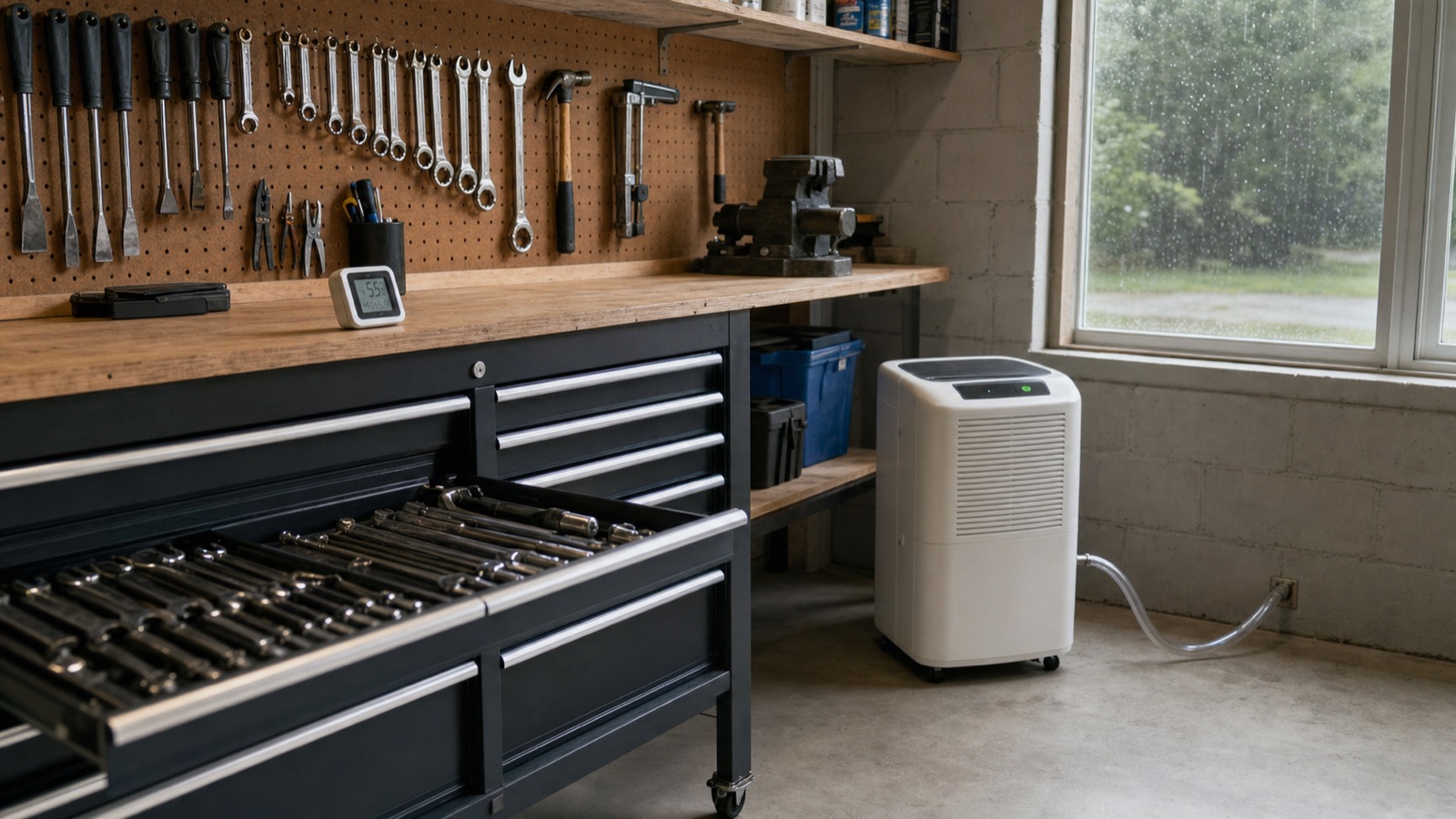
Consider air volume, air leakage, typical humidity, wet vehicles, slab or wall dampness, laundry or process water, and door cycling. Correct liquid-water entry first. Then select continuous drainage where practical and position the unit for free airflow.
Our dehumidifier calculator returns a deliberately broad nominal range and highlights temperature uncertainty. It does not replace manufacturer data or a building-moisture assessment.